
A common piece of advice we hear about giving presentations or writing scientific reports is “tell a story.” I’m fully on board with this advice. Yes, absolutely, tell a story. But, what if that’s where the advice ends? What if you don’t know how to tell a story? Does that mean you’re just not cut out to be an engaging writer or speaker? On the contrary, telling stories is a learnable skill. I am convinced anybody can tell an engaging story, once they have learned the framework of how to structure a story and what to present in which order.
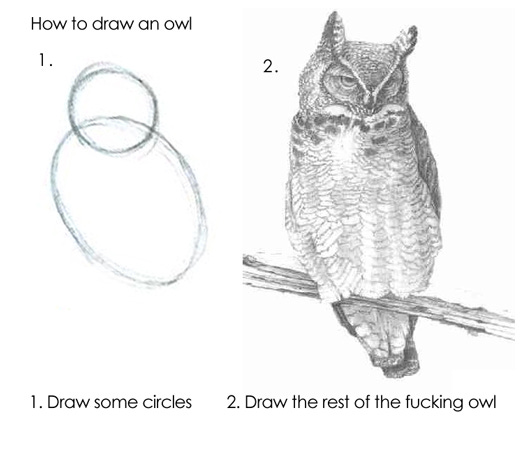
I encountered this type of advice most recently in an article in Nature Reviews Cancer on the topic of giving presentations.1 In the first subsection, which covers the overall presentation structure, the article states:
Develop a ‘story’ by ordering your points – working backwards from the point you want to get across to the background required to build up to it – so that the audience has the best chance of understanding what you have to say.—Itai Yanai, Nature Reviews Cancer 2026.
Note how this excerpt doesn’t actually explain how to tell a story, other than that there should be some sort of order from beginning to end. Further, note how the word “story” is in quotes. I take this to mean the authors isn’t sure himself of what a story is. He doesn’t seem comfortable to plainly recommend you to tell a story. He can only recommend you to tell a ‘story.’2
Surely we can do better. Let’s start with a definition. What is a story? A story is a collection of observations, facts, or events presented in a specific order such that they create an emotional reaction.3 The most important element here is the last part, “emotional reaction.” You want your audience to experience an emotion, such as joy, surprise, satisfaction, pleasure, sadness, anger, or horror.4 Which specific emotion you choose depends on your goals, audience, and settings. In most scientific or professional settings, you may prefer a positive emotion (joy, surprise, satisfaction, pleasure) over a negative one (sadness, anger, horror). However, negative emotions have their place. For example, if you want to convince your audience to donate or otherwise provide funds for a specific cause, negative emotions can be strong motivators.
A story is a collection of observations, facts or events presented in a specific order such that they create an emotional reaction.
So now we know what our goal is (evoke an emotion), but we still don’t know how to get there. Some people have an innate instinct for story telling; they can create strong emotions in their audience without necessarily knowing how or why. But many people do not. They need to follow a more systematic and structured approach.
I will explain this structured approach momentarily. But before we go there, I want you to remember this one concept: Challenge – Resolution. Every story requires some sort of challenge that then leads to a resolution. The tension between the challenge and the resolution creates the emotional reaction in your audience. If you keep this concept in the back of your mind as you develop your narratives you’ll do better than most.
There are a few different ways of structuring a story, and it is generally helpful to be aware of the various structures and their respective pros and cons. This is material that I teach routinely in my class on data visualization. The concepts I am going to describe are quite general, and they apply just the same when giving a talk or writing articles, proposals, or emails, or otherwise communicating in any way with fellow human beings.
Let’s begin with the most standard, conventional story structure. It has four components:
Basic story structure
Opening
Challenge
Action
Resolution
Here, Challenge and Resolution are the most important. Get through the opening quickly to present the challenge before your audience loses interest. Then spend some time describing the action that gets you from the challenge to the resolution. Finally, present the resolution, making sure that it fully addresses the original challenge.5 Audiences are quite sensitive to challenges that weren’t fully resolved. They will typically describe such situations using words such as “the ending was disappointing.” They may not know exactly why they feel this way, but they know that something was off. Don’t put your audience into this position.
When I teach this material in my class on data visualization, I usually tell my own story of how I ended up writing a book on data visualization and then started teaching the material.6 This allows me to highlight how different elements of the story map onto the various components of the story structure:
Opening: I am primarily a computational biologist, running an active research lab. This work frequently requires creating data visualizations. Unfortunately, many of the new students joining my lab don’t know much about how to visualize data.
Challenge: I spend a lot of time coaching students how to make good visualizations. This means I find myself teaching the same concepts over and over.
Action: I had the idea that I could make my life easier by writing a book about data visualization. If the book captures all my thoughts and knowledge about the topic, then students can just read the book and self-study. They will no longer require my direct coaching, and I can spend more time doing computational biology.
Resolution: The book is written. It has been a great success. However, now I teach data visualization as an official university course, so I still keep teaching the same concepts over and over.
Next is the action-movie structure. It has five components:
Action-movie structure
Action
Background
Development
Climax
Ending
The main difference to the basic story structure is that at the beginning the audience is disoriented but hopefully drawn in by the action. Where the basic story structure takes the audience by their hand and gently leads them to the challenge, the action-movie structure does the opposite. It drops the audience in at the deep end and hopes they can swim. This story structure is routinely used in action movies (hence its name), but it is also commonly used in novels. If you’ve ever read a novel that at the beginning had you utterly confused about what was happening, chances are it was using this structure.7 Importantly, when you’re using the action-movie structure, even though none of the five components is explicitly called “challenge” you still need to set up a challenge, either in background or in development. Climax and ending will provide the resolution.
Here is my story in the action-movie format:
Action: In May 2017, I embark on a major project: I write a book on data visualization.
Background: I do this because we need to make many data visualizations in my lab, and I end up telling my students the same things over and over.
Development: Writing the book takes me almost two years; along the way, I add many features to ggplot2 and become a member of the ggplot2 team.
Climax: The book is released in April 2019.
Ending: Now I’m a dataviz teacher.
The final story structure is primarily used in newspaper articles. It has only two components:
Newspaper story structure
Lead
Development
The lead will typically contain both the challenge and the resolution, giving away the entirety of the story in the first few sentences. The development part then provides additional material and further detail.
Here is my story in this format:
Lead: Because I see the need for more education in data visualization, I have written an entire book about the topic.
Development: I had previously written an R package to improve figure design, but it wasn’t sufficient: Good judgement cannot be automated.
So I wrote a book; the book is entirely about concepts, not about coding, and it is meant as a resource for anybody doing data visualizations, regardless of their preferred visualization software.
Which of these story structures should you choose? To a large extent it depends on how captured your audience is. The basic story structure requires an audience with some patience. They need to wait for the story to unfold. But it has the advantage of having some temporal distance between challenge and resolution, which creates tension and will make your story telling more impactful. In general, the basic story structure is a good option for invited seminars and scientific talks, where you can assume the audience will stay for your entire presentation and not just walk out. This structure is also a good option for scientific papers and reports.
The action-movie structure requires even more commitment on the side of your audience. They need to stick around even though they’re confused at the beginning, but hopefully the action draws them in and keeps them engaged. This format tends to work best when the audience arrives with the expectation to sit through the entire experience, as would be the case for a movie shown in a theater.8 If there’s any chance that your audience may lose interest and disengage, don’t choose this structure.
In fact, whenever you’re dealing with an audience with short attention span, you should stick to the newspaper story format. This may apply less commonly when giving presentations, but it is useful in other contexts, such as writing a newspaper article (most people don’t read past the first paragraph), posting on social media, writing a job application, reaching out to somebody with a cold email, or writing a grant proposal. In all of these cases, there is no guarantee your audience will make it through the entirety of your material, and therefore the more you can hook them right at the start and give them a sense of what they’ll be getting if they stick around the better. I don’t know how many times I’ve read emails or personal statements where I’m two pages in and I still don’t know what the person wants. In those cases, it happens more often than I’m willing to admit that I lose patience and just move on to something else.
In summary, choose one of the standard formats to tell your story, picking the one that fits best with your audience’s estimated attention span. Then, make sure you know exactly how the different parts of your story map to the components of the story structure you have chosen. Finally, and most importantly, identify a good challenge, which you clearly express regardless of which story format you have chosen, and provide a satisfying resolution to your challenge at the end of your story.
More from Genes, Minds, Machines
Slides that present themselves: The assertion–evidence approach

Your slides are not your talk. A strong speaker can take almost any slides and turn them into an engaging presentation. In fact, a strong speaker can hold an audience enthralled without any slides at all. And yet, slide design matters. Bad slides can get in the way of giving a good talk, and excellent slides can elevate your presentation. Also, importan…
Practice the presentation speedrun

To give a successful presentation, you have to have memorized the entire sequence of slides you will be using. At no time should you be confused about what slides come next or what the purpose of a slide is when you pull it up. You probably have seen presentations where the speaker advances to a slide only to appear stumped and confused about why it is …
Unfortunately the article is behind a paywall, but this link should allow you to read it. Thanks to Stephen D. Turner for providing the link.
As an aside, this seems to be a classic case of misuse of quotes. The main uses of quotes are (i) to refer to the word itself rather than its meaning (“the” is an article); (ii) to indicate that you’re reproducing somebody else’s words (Caesar said “veni, vidi, vici”); (iii) to indicate irony, i.e., to signal that you mean the exact opposite of the conventional meaning of the word (our burgers are “vegetarian;” they’re made from grass-fed beef). You can’t use quotes to indicate that you’re using a word in a slightly non-standard way, as that use is indistinguishable from irony.
I do not remember my source for this definition, but I’ll take this opportunity to recommend: Schimel, J. Writing Science: How to Write Papers That Get Cited and Proposals That Get Funded. Oxford University Press, 2011. Most of what I know about storytelling comes from this book.
Strictly speaking, boredom is an emotion as well, but that’s the one you want to avoid.
I see unresolved challenges all the time in scientific presentations. The speaker opens with the goal of curing cancer and closes with some minor progress in some obscure cancer-related subfield. This will never work. If you haven’t cured cancer then don’t present that as your challenge. Instead, the topic of curing cancer belongs into the opening. It’s the broader field in which you’re working. But it’s not the specific challenge you’re tackling.
In case you’re interested, you can read the entire book here, for free. You can also take a look at my class materials.
Alternatively, it may just have been poorly written. I’ll let you be the judge of that.
If you’re making YouTube videos and can open them with completely insane stunts that just leave your audience awestruck then this story format may be right for you. Your audience will likely stick around for the rest of the video after having seen your initial stunt. I assume this advice is not useful for the majority of my readers.
I’ve told people to develop a lesson plan - but an engaging lesson plan (and yes there is structure for that too) - the goal is to have them learn new facts about your work - I’m not sure emotion is involved other than curiosity
Nice post Claus! Keeping things above board, maybe link to this one instead of my screenshot: https://rdcu.be/fskvC